Everest Base Camp Trek
Walk to the foot of the highest mountain on earth
Overview
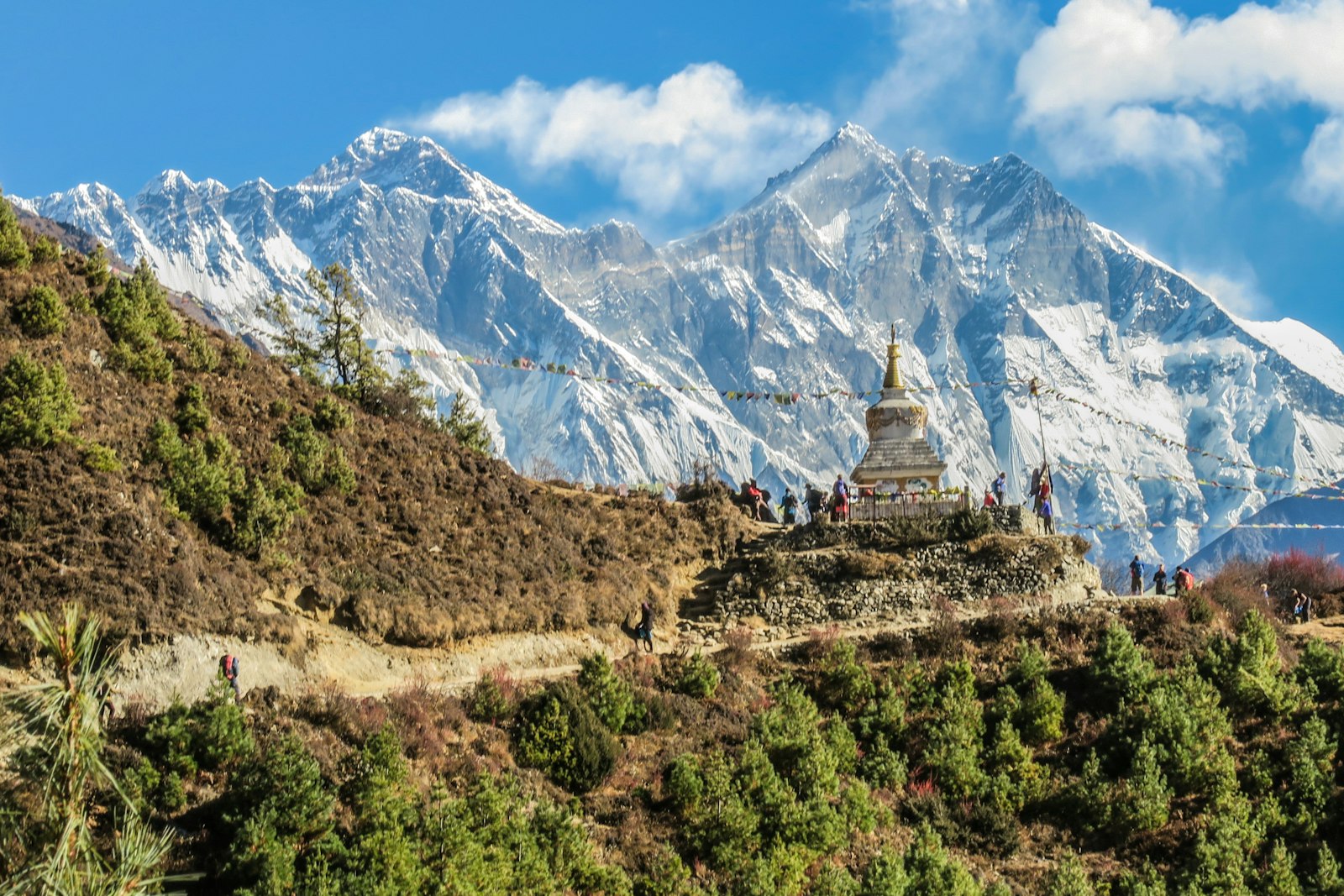
The Everest Base Camp Trek takes you to the foot of the highest mountain on earth. It's a 130-kilometre walk through the Khumbu region of northeastern Nepal, and the appeal is straightforward: big Himalayan scenery, time among the Sherpa communities who live here, and the payoff of reaching 5,364 metres at the base of the Khumbu Icefall, with the summit of Everest above you.
It starts with a small plane landing on the short airstrip at Lukla. From there the trail climbs through rhododendron and pine forest, over suspension bridges hung with prayer flags, past mani walls carved with Buddhist mantras. You pass through trading villages, the largest being Namche Bazaar. Namche is the main Sherpa town in the region, and it has espresso, gear shops, and plenty of people who've spent time on the big climbs.
The Sherpa presence shapes the whole trek. Their ancestors came over from Tibet more than four centuries ago, and the community has long been central to mountaineering here. You'll pass gompas, drink butter tea in family-run tea houses, and see Buddhist practice woven into daily life along the trail.
The itinerary builds in acclimatisation days at Namche Bazaar and Dingboche so your body has time to adjust, and you use those days to walk up side valleys and viewpoints rather than sit still. The high point is Kala Patthar at 5,545 metres. At sunrise it gives you a long view over Everest, Lhotse, Nuptse, Ama Dablam, and the peaks around them, and it's about the best mountain panorama you can reach without technical climbing.
This is a hard trek. The altitude is real and the days are long, but it's within reach of a fit person who trains for it.
Day by Day Itinerary
An early morning flight from Kathmandu's Tribhuvan Airport to Tenzing-Hillary Airport in Lukla (2,860m). The landing on Lukla's short, sloping runway is famous, and it lives up to the reputation. You'll meet your guide, sort out your kit, then start walking. The trail drops gently alongside the Dudh Koshi River through pine forest to Phakding, where the tea houses sit along a sunny stretch of valley.
Permits & Cost Breakdown
Required Permits
| Item | Cost | Notes |
|---|---|---|
| Sagarmatha National Park Permit | $30 USD | Everyone entering the national park needs one. It's issued at the park gate in Monjo. Bring passport-sized photos. |
| Khumbu Pasang Lhamu Rural Municipality Fee | $20 USD | A local fee that goes toward infrastructure and conservation in the Khumbu. It's collected at checkpoints along the trail. |
Additional Costs
| Item | Cost | Notes |
|---|---|---|
| Licensed Guide (per day) | $35–45 USD/day × 14 days | Strongly recommended, and increasingly required. A guide handles safety calls and logistics and tells you what you're looking at. Hire through a registered agency. |
| Porter (per day) | $20–25 USD/day × 14 days | A porter carries up to 25 kg, which makes the walking a lot more pleasant. The money goes straight into the local economy. One porter is usually shared between two trekkers. |
| Tea house accommodation | $10–25 USD/night × 13 nights | Basic twin rooms are often free if you eat your meals at the lodge. Private rooms with attached bathrooms cost more and get harder to find the higher you go. |
| Meals along the trail | $30–50 USD/day × 14 days | Prices climb with altitude, because everything has to be flown or carried up. At the high camps reckon on $10–15 a meal. Dal bhat, noodles, and pasta are the staples. |
| Kathmandu–Lukla flights (round trip) | $350–450 USD | Booked through the authorised airlines: Tara Air, Summit Air, Sita Air. Prices move with the season. Book early for spring and autumn. |
| Travel insurance with helicopter evacuation | $80–150 USD | Don't trek without it. Your policy has to spell out helicopter rescue cover to at least 6,000m. Read the fine print before you buy. |
| Gear rental or purchase | $100–300 USD | You can rent decent gear cheaply in Thamel. Budget for anything you don't already own. A good sleeping bag and a down jacket are the two you can't skimp on. |
What to Pack
Tips & Important Information
Take Altitude Sickness Seriously. It Can Be Deadly.
Acute Mountain Sickness kills trekkers on this route every year. Don't go higher if you have a headache that won't quit, you're vomiting, or you feel unsteady on your feet. The only reliable fix for severe AMS is to descend, whatever the hour and however close you are to base camp. Take your acclimatisation days, drink 3–4 litres of water a day, and don't let your ego, or the rest of your group, talk you past what your body can handle.
Book Flights and Guide Early for Peak Season
The spring (March–May) and autumn (Sep–Nov) windows draw a lot of people. Kathmandu–Lukla flights use small aircraft and sell out weeks ahead. Tea houses between Namche and Gorak Shep fill fast too. You don't have to lock down every night in advance, but in peak season you do want your guide and your flights booked 2–3 months out.
Train Hard for 3 Months Before You Go
The people who enjoy EBC are the ones who show up fit. Build an aerobic base with daily 45-minute cardio sessions, whether that's uphill walking, cycling, or stair climbing, then work up to long weekend hikes with a weighted pack. Try to get in at least two hikes of 20-plus km with 1,000m or more of climbing before you leave. Strong legs and good endurance are the difference between a slog and a trip you're glad you did.
Budget More Than You Think You'll Need
Prices climb steeply with altitude. A cup of tea that's $1 in Namche is $4 at Gorak Shep. Be generous with your food and drink budget, because eating and drinking enough is what keeps you going and keeps you healthy. Then there are the costs that creep up on you: charging devices, hot showers, WiFi, porter tips (usually $5–10 a day), and guide tips ($20–30 at the end). Keep $200–300 back as a buffer.
Sort Out Travel Insurance Before You Leave Home
Don't set foot on this trek without insurance that spells out helicopter evacuation up to 6,000m. A rescue from high altitude runs $5,000–$15,000, and no decent rescue company will launch without proof your insurance will pay. Read the fine print closely. Plenty of standard travel policies quietly exclude anything above 4,000m or anything labelled an 'extreme activity'. World Nomads, True Traveller, and Battleface are the names people tend to use for high-altitude trekking.
Frequently Asked Questions
Recommended Gear
We earn a small commission at no extra cost to you.
Book a Local Guide via GetYourGuide
Connect with experienced, licensed local guides for a safe, enriching trek — browse availability on GetYourGuide.
More Nepal treks
Annapurna · Moderate
Annapurna Base Camp Trek
Ten days into the Annapurna Sanctuary
10 days
Annapurna · Challenging
Annapurna Circuit Trek
A full loop around the Annapurna massif, from jungle to high desert
13 days
Langtang · Moderate
Langtang Valley Trek
Nepal's closest big valley, and one of its quietest
8 days